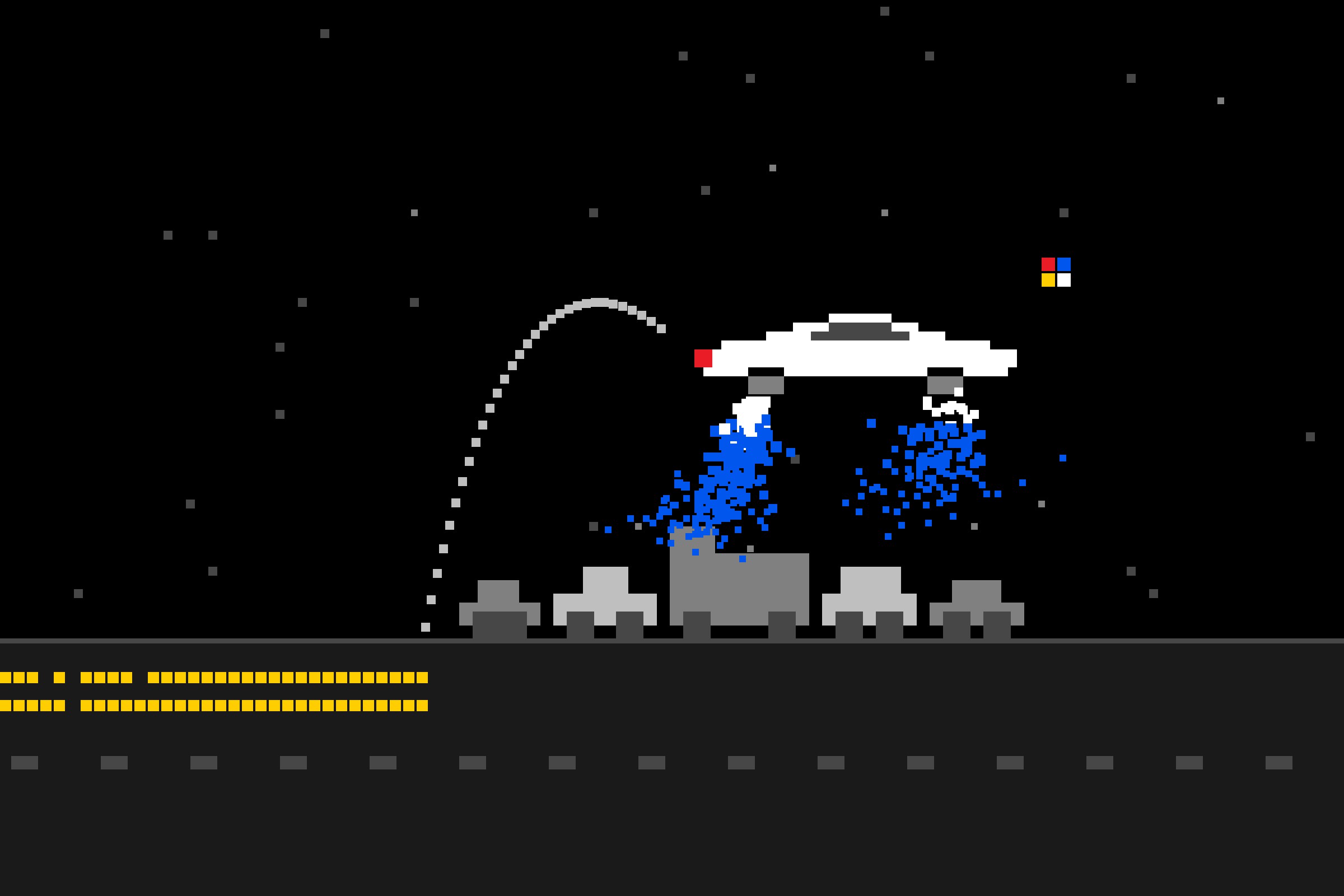
A few minutes after six o’clock Pacific tonight, a Tesla Roadster lifted itself over a Cybercab, a Cybertruck, a Semi, a Model Y and a Model 3 while moving. Tesla says the quickest version reaches 60 mph in under 0.59 seconds. I think it’s a historic moment for the automobile, and it’s still a demo. Elon Musk says production starts in 2028. Between now and then, the Roadster has to clear two things harder than a row of cars: the rulebook and the factory.
Back to the Future is one of the clearest pictures I carry from childhood. Doc Brown pulls down his goggles, tells Marty, “Where we’re going, we don’t need roads,” and the DeLorean lifts off. That scene closed the first film in 1985 and opened Part II. For four decades it stayed a movie scene. Tonight I watched a real car do it, and I was in shock and awe. It was inspiring.
What actually happened
The car used high-powered fans and thrusters to drive up an inverted ramp, spin around and settle back onto the pavement. The thrusters run on compressed air, not rocket fuel. Tesla says the air is stored in carbon-fiber pressure vessels packed into every spare space in the car, and refilled while it drives. Musk first floated the idea in 2018, and tonight he credited Tesla and SpaceX engineers working side by side for making it real.
Here’s why I think it matters. For 140 years, every car has depended on four patches of rubber, each roughly the size of your hand. Grip, braking and cornering all come down to friction at those patches; push past it and the car slides. This one can push on the air instead. Engineers have chased that idea before: Gordon Murray’s Brabham fan car won a Formula 1 race in 1978 by sucking itself to the track, then was withdrawn. Tesla took the idea further. One of tonight’s most remarkable moments came early: the car’s fans held it to a ramp that curved until the car was almost upside down. And Tesla says it will sell a version of this car for the road.
That puts tonight in good company, if it ships. Each step in the timeline below raised the ceiling for everything built after it. Tonight may join that list. I’d like to see one in a customer’s driveway first.
The rulebook
In my world, a great early readout is exciting, and nobody calls the drug approved. The FDA signs off before anyone can sell it. Cars work the other way around. In the US, carmakers certify their own vehicles against federal safety standards, and NHTSA doesn’t approve a car before it’s sold. It tests, investigates defects and orders recalls afterward.
That sounds like the easier path. For a car that pushes on the air, I’m not sure it is. The federal standards cover brakes, belts, lights and crash structures, all written for vehicles that stay on the ground. The nearest I’ve found covers natural gas fuel tanks. None says what a high-pressure air tank should do in a side impact, or what a thruster blast means for the cyclist beside you at a red light. If the car ever leaves the pavement on a public road, the FAA may want a say too. Earlier this year Musk said that if safety is your top goal, the Roadster isn’t your car.
The version that flew tonight, the single-seat Rocket, is invite only, and Tesla says it isn’t approved for public road use. My guess is that the first Roadsters may reach customers with the thrusters limited to closed tracks, while the road question waits on regulators. I’d be glad to be wrong.
The factory
Then there’s the calendar. “We enter production in 2028,” Musk said tonight. That window opens in about 15 months and closes in about 26. The Roadster’s record says to plan for the far end. It was first promised for 2020. By my count from the public record, the production target has moved six times since: to 2021, 2022, 2023, 2024, 2025 or 2026, and 2027 or 2028.
The fair counterpoint is that Tesla can move fast when a product matters to it. It showed the Cybercab in October 2024 and built the first production unit in February 2026, about 16 months later. The Cybertruck took four years from reveal to first customer deliveries. The Roadster has the harder brief: new hardware and no rulebook written for it. Musk has also said he isn’t sure it moves the needle much on revenue. My bet is that customer cars by late 2028 would be a good outcome.
Where it points
The line I keep coming back to is Musk’s own. He has called this car “the best of the last of the human-driven cars.” I find that hopeful. Tesla’s Cybercab already gives paid rides. If machines take over the commute, the cars people still choose to drive can be built for the joy of it, and tonight showed what that could look like.
Here’s where I land. I drive a Tesla, my second one. I’ve been waiting for this moment for 37 years, since I was a nine-year-old kid. If this car makes it to production, I want one.
I’m putting myself down for a reservation.
Disclosure: I invest in technology companies and may hold positions, directly or through index funds, in companies mentioned in this piece. This is my personal view, not investment advice, and it does not speak for any company I lead.
Sources
- TechCrunch, Oct. 15, 2026: Tesla reveals SpaceX-powered Roadster
- Electrek, Oct. 15, 2026: Tesla unveils new Roadster
- Drive Tesla, Oct. 15, 2026: Roadster revealed
- Engadget, Oct. 15, 2026: Roadster reservations
- The Drive, Oct. 15, 2026: Roadster reveal
- Yahoo Finance, Oct. 15, 2026: production in 2028
- Wikipedia: Tesla Roadster (second generation)
- FinanceFeeds: Roadster delays
- Wikipedia: Tesla Cybercab
- Wikipedia: Tesla Cybertruck
- 49 U.S.C. 30115: certification of compliance
- FMVSS 304: compressed natural gas fuel container integrity
- NHTSA proposed rule, regulations.gov
Cover: illustration by Torpedo Publishing, in PD brand colors.