
On July 30, an avalanche on Broad Peak in Pakistan killed Nirmal Purja, along with other members of the expedition his company was running. He was 43. Most of the climbing world knew him as Nimsdai.
I’ve been looking at a course with that company, Elite Exped. It’s called Summit Ready: 23 days in Nepal’s Khumbu, training around Everest Base Camp and finishing with a summit attempt on Lobuche East, at 6,119 meters. It was offered on dates my work schedule couldn’t make, and it’s quite a commitment of time. I haven’t signed up. I’m still considering it. When I checked in early October, the course page still listed him among its leaders.
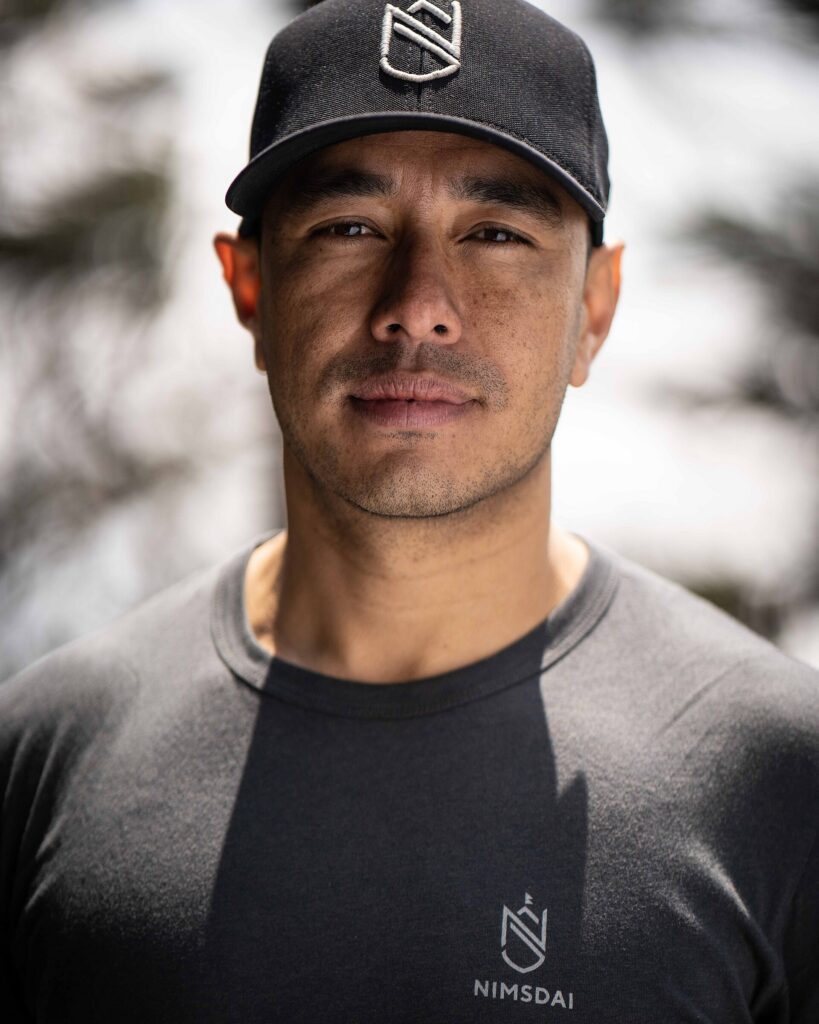
Photo: Iamthanes, via Wikimedia Commons, CC BY-SA 4.0

I’m only a few years older than he was, and I looked up to him anyway. What inspired me was what he did as an athlete and an adventurer. He’s been back on my mind since October 2, when Apple TV released The Last First: Winter K2, a documentary about the 2021 winter season on K2, the season his team reached the top first.
In 2019 he set out to climb all fourteen of the world’s 8,000-meter peaks in seven months. He was clocked at six months and six days, beating the old mark by more than seven years. In January 2021 he was one of the ten Nepali climbers who made the first winter ascent of K2.
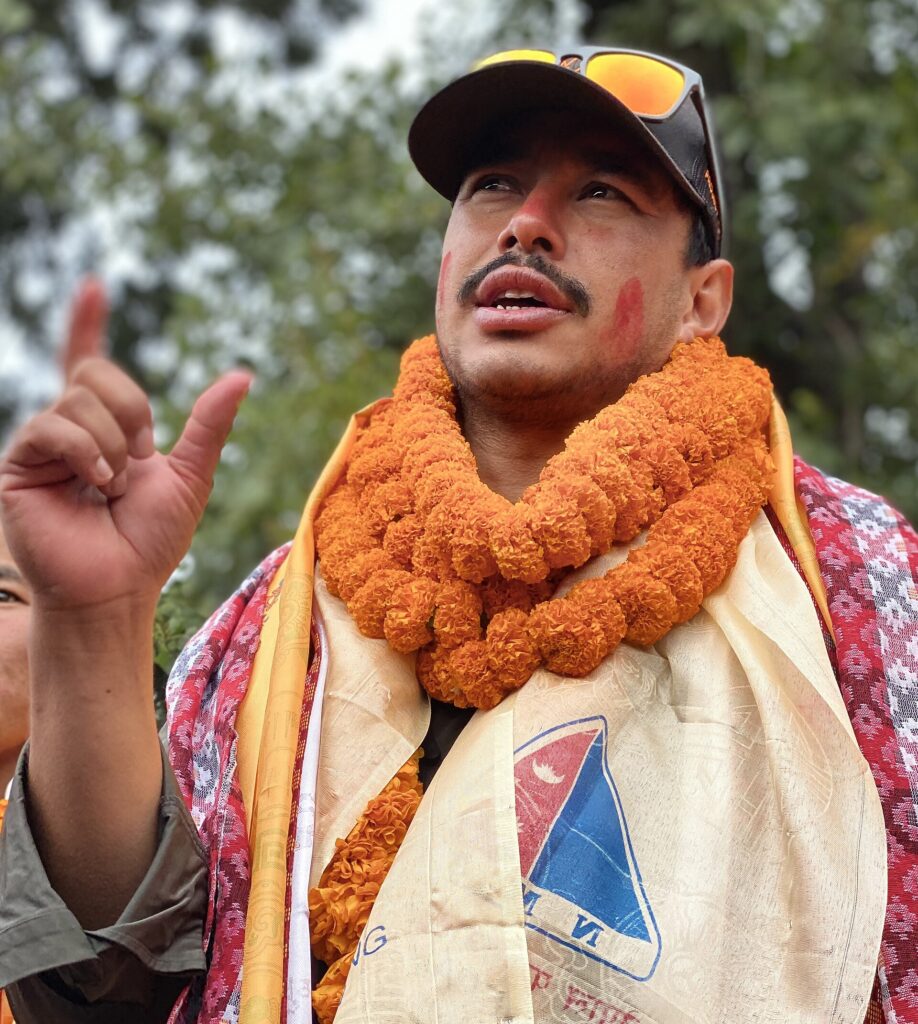
Photo: Gwrthanesh, via Wikimedia Commons, CC BY-SA 4.0

Before any of that, he’d spent years in the British Army. He joined the Brigade of Gurkhas at 18, and in 2009 he became the first Gurkha to join the Special Boat Service.
What I admired most wasn’t the speed. It was K2. The climbers who stood on top that winter were Nepali, and the world learned their names. In a sport where Sherpa, Nepali and Pakistani climbers have often fixed the ropes and carried the loads while others got the credit, that mattered to me.
I’ve done two Ironmans and seven half Ironmans. After my first Ironman finish line, I was so delirious that I asked one of the volunteers helping finishers where I was supposed to go next. Talk about hallucinations. Pushing past what I thought I could do is an instinct I know well. But wanting the edge and being ready for it are different things, and knowing your real margins matters more than borrowing someone else’s appetite for risk. That’s why the course is still a maybe.
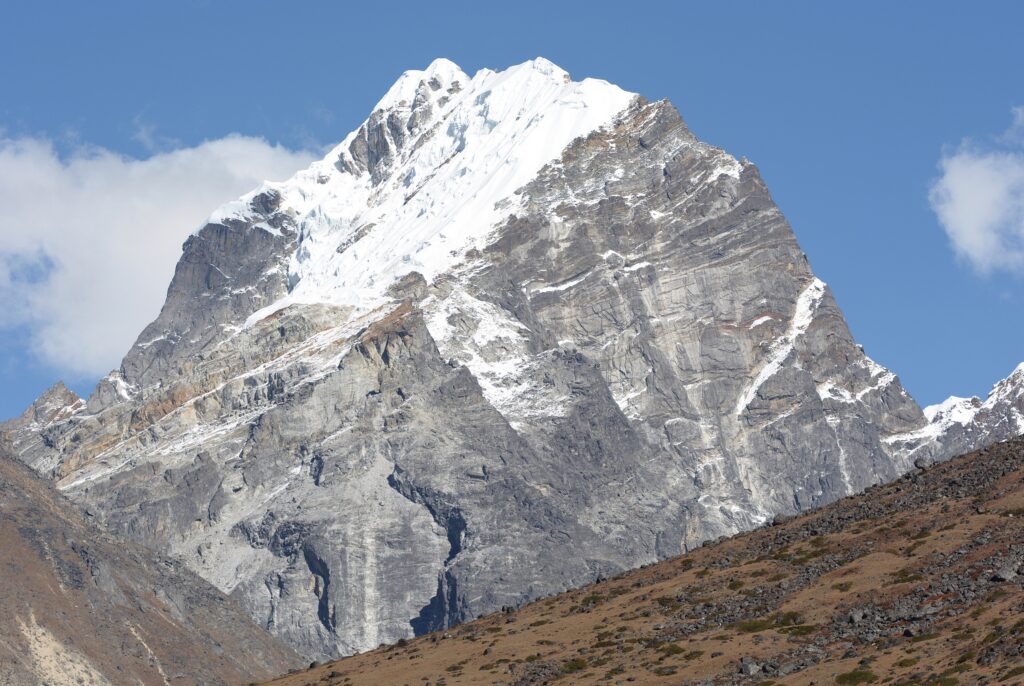
Photo: Theprotrekker, via Wikimedia Commons, CC BY-SA 4.0

Even his record had a flaw, and what he did about it gets told less. Researchers who checked exactly where climbers had stopped found that he, like many others, had stopped short of the true summit on two peaks, Manaslu and Dhaulagiri. He went back and climbed both to the top. In 2023, Guinness World Records rebuilt its list on true summits only. His recognized time became about two years and five months, and the speed record now belongs to Kristin Harila and Tenjen Lama Sherpa, at 92 days.
Biopharma taught me that a claim is worth what its evidence is worth. After the research came out, he went back up the mountain. Many heroes have imperfections. He was still one of mine.
The allegations against him are a different kind of question. In May 2024, The New York Times reported accusations of sexual harassment and abuse against him from two women climbers. Through his lawyer, he unequivocally denied them, calling them false and defamatory.
He can’t answer them now. That doesn’t make them go away. I don’t condone harassment of any kind, and admiring what someone did on a mountain doesn’t mean defending what they’re accused of doing off it.
So here’s what I’m keeping. What he showed about what people can do when they stop accepting old limits. What he did for Nepali climbers on K2. And the fact that he went back when the record said he’d fallen short. What I’m not keeping is the idea that anyone who climbs that high is above question.
I haven’t taken the course. Not yet.
He’ll be remembered for how he led. In January 2021 his team was one of three that waited just below the summit of K2, so all ten Nepali climbers could step onto the top together, singing their national anthem. There’s what he did himself, too: the 2019 push across the world’s fourteen highest peaks, then K2 in winter, the kind of climbing that inspired me as an athlete. And there’s what he did for Nepali climbers. On K2 in winter, the names at the top were theirs.
Rest well, Nimsdai.
Sources
- Kathmandu Post, “Nirmal Purja, who redrew the limits of human endurance and reshaped Nepali mountaineering, dies in Broad Peak avalanche,” 07.31.2026.
- ExplorersWeb, “EliteExped Confirms Nirmal Purja Dead on Broad Peak,” 08.01.2026.
- The New York Times, “Nirmal Purja, Renowned Mountaineer, Dies at 43 After Pakistan Avalanche,” 08.01.2026.
- Elite Exped, “Bespoke Training Programme: Summit Ready,” accessed 10.03.2026.
- Apple TV Press, “Apple Original Films debuts The Last First: Winter K2 trailer,” 09.10.2026.
- Red Bull, “Project Possible: The 14 highest peaks in just 6 months,” 10.01.2020.
- Alpinist, “First winter ascent of K2: 10 Nepali/Sherpa climbers summit together,” 01.16.2021.
- The Gurkha Museum, “Nims Purja MBE,” 11.19.2021.
- The Himalayan Times, “Climbers head to Manaslu to regain lost recognition,” 09.12.2022.
- Guinness World Records, “Reclassifying the 8000ers,” 09.18.2023.
- Sherry B. Ortner, Life and Death on Mt. Everest: Sherpas and Himalayan Mountaineering, Princeton University Press, 1999.
- Anna Callaghan and Jenny Vrentas, “For Female Climbers, Dangers Go Beyond Avalanches and Storms,” The New York Times, 05.31.2024.
- UK Climbing, “The New York Times publishes sexual harassment and abuse accusations against Nirmal Purja,” 06.2024 (statement from his lawyer).
Cover: K2 (8,611 meters), where ten Nepali climbers made the first winter ascent in January 2021. Photo taken August 2006 by Svy123, via Wikimedia Commons, CC BY 3.0, cropped, sky extended.
